Stable. Comfortable. Built to Last — Right Here Near You in Algoma.
If you’ve been living with loose, slipping, or uncomfortable dentures, or if you’re facing the loss of most or all of your teeth and want a better option than traditional dentures, implant-supported dentures in Algoma, WI, may be exactly what you’ve been looking for.
At Algoma Family Dentistry, we provide dental implants for patients throughout Algoma, Kewaunee, Casco, Luxemburg, Sturgeon Bay, and Green Bay, WI. Dr. Daniel Fama, an ICOI fellowship candidate with advanced surgical and restorative implant training, performs both the implant surgery and the final restoration under one roof. No referrals to unfamiliar specialists or driving to Green Bay for a second opinion. Just clear answers, advanced technology, and a treatment plan built specifically for your smile.
Call our Algoma dental office at (920) 487-2733 or read on to find out if implant-supported dentures near you are the right fit for your needs.
What Are Implant-Supported Dentures?
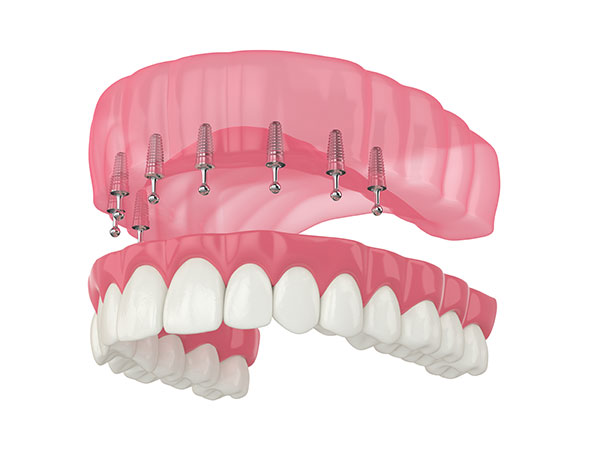
Implant-supported dentures, also called overdentures, are full-arch prosthetics that attach to dental implants surgically placed in your jawbone rather than resting on your gums the way conventional dentures do. The result is a denture that stays put: no slipping when you eat, no clicking when you talk, and no messy adhesives to deal with at the end of the day.
Here’s how they work: titanium implant posts are placed into your jawbone, where they fuse to the bone through a natural process called osseointegration. Once that fusion is complete, typically over three to six months, your custom overdenture snaps or clips onto the implants using precision attachments. The implants act as artificial tooth roots, giving your denture the stability that only something anchored in bone can provide.
This is fundamentally different from a conventional denture, which relies on suction and gum contact to stay in place. As bone loss continues (and it always does with conventional dentures, because there are no roots to stimulate the jaw), the fit gets worse over time. Implant-supported dentures stop that process—the implants stimulate the jawbone the same way natural roots do, helping preserve your bone structure and facial shape for years to come.
Why Choose Algoma Family Dentistry for Dental Implants Near You?
There are other dental offices in the region. Here’s why patients from Kewaunee, Casco, Luxemburg, Sturgeon Bay, and Green Bay make the drive to our Algoma dental office for implant care:
Dr. Daniel Fama—Implant-Trained, Fellowship Candidate
Dr. Fama is a fellowship candidate for the International Congress of Oral Implantologists (ICOI) and has completed extensive surgical and restorative implant training through the Restorative Driven Implants curriculum. His training focuses not just on placing an implant but also on ensuring the final restoration fits your bite perfectly, looks natural, and lasts. That coordination between the surgical and restorative phases is what separates good outcomes from great ones.
CBCT 3D Imaging—Precision You’d Find in a Surgical Center
Dr. Fama brought cone-beam computed tomography to Algoma Family Dentistry—the same 3D imaging technology used in major oral surgery centers. We map your exact bone density, nerve locations, and jaw anatomy in three dimensions before any incision is made. Paired with digital scanning and in-office 3D printing capability, our surgical planning happens at a precision level typically found only in metropolitan specialty practices.
Everything Under One Roof in Algoma
For most patients, the entire process—from consultation through final restoration—takes place right here at our Algoma dental office. No referrals to unknown specialists, no coordinating between multiple offices, no explaining your case from scratch at every visit. Drs. Sigl and Fama coordinate every phase of your care, so you always have a familiar team who knows your history, your goals, and your smile.
Types of Implant-Supported Dentures
Not all implant-supported dentures are the same. At Algoma Family Dentistry, Dr. Fama will recommend the design that best fits your anatomy, bone density, and lifestyle. Here’s what the common options look like:
Ball-retained overdentures, sometimes called snap-in dentures or locator dentures, use individual ball-shaped attachments on each implant that snap into corresponding sockets built into the underside of the denture. Most patients find this the easiest system to use day-to-day. The snapping action is intuitive, cleaning is straightforward, and the individual attachments are simple to replace if they wear down over time.
This system typically uses two to four implants in the lower jaw and is the most common starting point for patients transitioning away from a full conventional denture. It’s also a popular choice for patients asking about snap-in dentures near them—it’s the same concept under a more clinical name.
Bar-retained overdentures attach a thin custom metal bar to two to five implants following the curve of your jaw. Clips on the denture’s interior fit snugly around the bar, holding the denture firmly in place with consistent, distributed retention across the arch.
The bar design offers excellent stability across a wider jaw span and is often preferred when patients have fewer implants supporting a larger denture, since the bar splints the implants together and distributes bite force more evenly. It also works well for patients with limited dexterity who find snapping individual attachments difficult.
For patients who want a completely non-removable result, fixed implant-supported dentures—sometimes called hybrid dentures or All-on-4 restorations—are permanently attached to four to six implants and can only be removed by a dentist. These function the closest to natural teeth: you brush them in place, eat with full confidence, and never take them out.
This option requires more implants and a higher level of surgical planning, but for the right candidate, the outcome is transformative. Dr. Fama uses CBCT 3D imaging to assess whether your bone volume and density support this approach before recommending it.
Mini dental implants are smaller-diameter posts used when jawbone volume isn’t sufficient for standard implants. They can be placed with a less invasive procedure and at a lower cost per implant, making them an accessible entry point into implant-supported dentures for patients who might otherwise need extensive bone grafting.
Mini implants are particularly common for lower-jaw overdentures, where bone width can be limiting. If you’ve been told you’re not a candidate for standard implants due to bone loss, mini implants may still be an option worth discussing at your consultation.
Why Patients Near Algoma Choose Implant-Supported Dentures
The difference between an implant-supported denture and a conventional denture isn’t just comfort—it’s the long-term health of your jawbone, your facial structure, and your quality of life. Here’s what our patients from Algoma, Sturgeon Bay, Kewaunee, and Green Bay consistently tell us they value most:
- No more slipping or clicking. Because the denture is anchored to implants, it doesn’t move when you eat, laugh, or speak. Patients regularly describe this as finally feeling normal again.
- Eat what you want. Conventional dentures generate only 20 to 25% of natural bite force. Implant-supported overdentures restore 70 to 90%—enough to eat most foods without restriction, including fresh vegetables, meats, and foods you may have given up years ago.
- Jawbone preservation. Every day a tooth root is missing, the bone beneath it loses stimulation and begins to resorb (shrink). Implants replicate that root function, halting bone loss and preserving the natural contour of your jaw and face over time.
- A more natural appearance. Bone loss is what causes that sunken look in long-term denture wearers. Because implants stop that process, implant-supported denture patients tend to maintain a fuller, more youthful facial profile.
- Long-term cost efficiency. Conventional dentures need relining and replacement as your jaw changes shape—typically every five to 10 years. Implants themselves can last 20 years to a lifetime. When you account for the cumulative cost of refitting conventional dentures, implant-supported options are often less expensive over a 20-year horizon.
- No adhesives, ever. Implant-supported dentures stay in place with mechanical retention—no creams, powders, or strips required.
How Much Do Implant-Supported Dentures Cost in Algoma, WI?
Cost is one of the first questions patients ask—and understandably so. Implant-supported dentures involve surgery, custom prosthetics, and multiple visits, so the range is wide depending on your specific situation.
- Ball-retained overdenture (2 implants): $3,000 – $8,000 per arch. Key variables include implant brand, bone prep, and sedation.
- Bar-retained overdenture (4 implants): $8,000 – $18,000 per arch. Key variables include bar fabrication and the number of implants.
- Fixed full-arch/All-on-4 style: $15,000 – $30,000 per arch. Key variables include material (acrylic vs. zirconia) and implant count.
- Mini implant overdenture: $3,000 – $7,000 per arch. Key variables include the number of minis and preparatory care.
- Traditional denture (no implants): $1,000 – $3,000. Key variables include materials and the customization level.
What drives your specific cost is the number of implants placed, whether bone grafting or extractions are needed beforehand, the type of attachment system (ball, bar, or fixed), sedation preferences, and the material used for the final prosthetic.
Insurance and Financing Near You in Algoma
Most dental insurance plans contribute to portions of implant-supported denture treatment—particularly the crown or prosthetic portion, the initial exam, and sometimes preparatory procedures like extractions. Full implant coverage is uncommon, but partial benefits are more common than most patients expect. Our team reviews your specific benefits at your consultation and works to maximize what’s available to you.
Financing options are also available at Algoma Family Dentistry. Call (920) 487-2733 before your appointment, and we’ll walk you through your payment options before anything is scheduled.
The Implant-Supported Denture Process at Our Algoma Dental Office
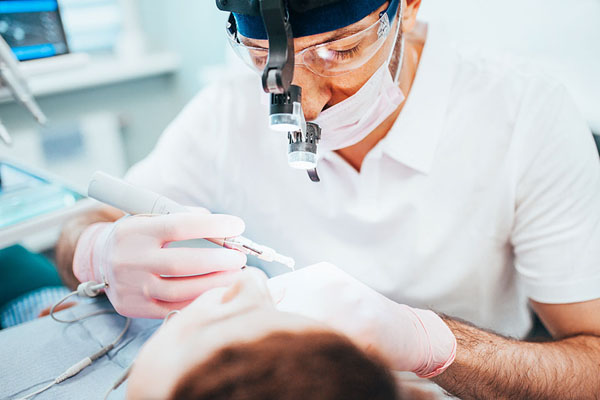
Understanding the timeline before you start makes the process far less intimidating. Here’s a step-by-step look at what the implant-supported denture journey looks like at Algoma Family Dentistry, from your first phone call to your final fitting.
Your journey starts with a comprehensive dental and radiographic examination, including a review of your full health history. In most cases, Dr. Fama uses cone-beam computed tomography (CBCT)—the same 3D imaging used in major oral surgery centers—to map your exact bone density, identify nerve locations, and plan the precise implant position in three dimensions before any surgery begins.
This is also where we discuss your options (ball-retained, bar-retained, fixed), walk through the timeline, and answer every question you have about the procedure, recovery, and cost. You leave this appointment knowing exactly what to expect.
Some patients need preparatory work before implant surgery—a tooth extraction, a bone graft to build up jaw volume, or periodontal treatment to resolve active gum disease. Our doctors handle these steps in the office whenever possible. Bone grafting isn’t always necessary, but when it is, it adds healing time (typically three to six months) before implants can be placed.
Titanium implant posts are placed into your jawbone under local anesthesia. You feel pressure, not pain, during the procedure. Where appropriate, Dr. Fama uses single-stage implants that eliminate the need for a second uncovering procedure, reducing your total number of surgical visits. In select cases, an implant can be placed at the same appointment as a tooth extraction, further consolidating your treatment.
Most patients take over-the-counter pain relievers for a few days post-surgery and return to normal activities within 24 to 48 hours.
Over the next three to six months, your bone fuses to the titanium posts through osseointegration. This is what gives implants their extraordinary stability and longevity—the same kind of bone-to-root fusion your natural teeth had. You’ll wear a temporary restoration during this phase so your day-to-day life isn’t disrupted. Most patients describe this period as uneventful.
Once osseointegration is confirmed (we verify this clinically and radiographically), the attachment system—ball locators, a custom bar, or abutments for a fixed restoration—is connected to the implants. Precise impressions or digital scans of your mouth are taken to fabricate your final overdenture.
Your custom implant-supported denture is seated and adjusted for fit, bite, and aesthetics. Dr. Fama checks every contact point to ensure the overdenture functions correctly across your entire bite, not just the front teeth. When you leave this appointment, you have a complete, stable, functioning smile that looks and feels like your own.
Total treatment time is six to nine months for most patients. The majority of that time is the osseointegration healing period—your daily life is not disrupted during that phase.
Are You a Candidate for Implant-Supported Dentures in Algoma?
Most adults missing multiple or all teeth are potential candidates for implant-supported dentures. The most important factors are bone volume and overall health, and even patients who have experienced significant bone loss may qualify for bone grafting.
You’re likely a strong candidate if you:
- Are missing most or all teeth in one or both arches
- Have healthy gums with no active periodontal disease
- Have adequate bone density, or are willing to undergo a bone graft
- Are a non-smoker, or are committed to quitting during healing (smoking impairs osseointegration)
- Have well-controlled systemic health (diabetes, for example, can affect healing when uncontrolled)
- Are committed to good daily oral hygiene and regular dental checkups at our Algoma office
Patients who were previously told they weren’t candidates due to bone loss should note that advances in bone grafting over the past decade have made implants accessible to many patients who would have been ruled out earlier. If you’ve been turned away elsewhere, a fresh evaluation with Dr. Fama’s CBCT imaging may reveal different options.
If implant-supported dentures aren’t the right fit for your situation, we also offer traditional dentures, partial dentures, and dental bridges to restore your smile and function.
Implant-Supported Dentures vs. Traditional Dentures vs. Dental Bridges
Choosing the right tooth replacement option is one of the most significant dental decisions you’ll make. Here’s an honest comparison of the three main options so you can go into your consultation already informed:
- Stability: Implant-supported dentures are fixed to implants and do not move, whereas traditional dentures rest on the gums and often slip.
- Jawbone Preservation: Implants stimulate the jawbone, preserving its structure. Traditional dentures do not, leading to ongoing bone loss.
- Chewing Efficiency: Implant-supported dentures restore 70 to 90% of natural bite force; traditional dentures restore only 20 to 25%.
- Adhesives: Never required for implant-supported dentures, but often needed for traditional dentures.
- Lifespan (Implants): Implants can last 20 years to a lifetime. Traditional dentures typically need replacement every five to 10 years.
- Lifespan (Prosthetic): Implant-supported prosthetics typically last 10 to 15 years, while traditional ones last five to 10 years.
- Initial Cost: Higher upfront cost for implant-supported dentures; lower for traditional dentures.
- Long-Term Cost: Often lower for implant-supported dentures due to fewer replacements, whereas costs accumulate for traditional dentures through relining and replacement.
- Bone Grafting: Sometimes needed for implant-supported dentures; never needed for traditional dentures.
Dental bridges are a strong option for replacing one to three missing teeth in a row but require grinding down the two adjacent healthy teeth permanently to serve as anchors. They don’t address bone loss beneath the gap and typically need replacement every 10 to 15 years. For patients missing an entire arch, bridges aren’t practical—that’s where implant-supported dentures or fixed full-arch solutions come in.
Our dentists near you in Algoma will walk you through all options honestly at your consultation. The right choice depends on your oral health, bone structure, lifestyle, and budget—and there’s no one-size-fits-all answer.
Frequently Asked Questions
The titanium implant posts themselves can last 20 years to a lifetime with proper care. The overdenture attached to them typically lasts 10 to 15 years before needing replacement or refitting, depending on the material and wear. Compare this to a conventional denture, which often needs relining or full replacement every 5 to 10 years as your jaw changes shape.
Largely, yes. “Snap-in dentures” is the patient-friendly term for implant-supported overdentures that use ball or locator attachments to snap onto implant posts. The clinical term is ball-retained overdenture. Both describe the same concept: a removable denture that attaches securely to implants rather than resting loosely on your gums. If you’ve been searching for snap-in dentures near you, implant-supported overdentures at Algoma Family Dentistry are what you’re looking for.
Possibly—and it’s worth finding out before assuming the answer is no. Advances in bone grafting over the past decade have made implant-supported dentures accessible to many patients who previously didn’t have enough bone. Dr. Fama uses CBCT 3D imaging to assess your exact bone volume and determine whether grafting would support implant placement. If you’ve been turned away by another provider due to bone loss. A fresh evaluation at our Algoma office may reveal options you didn’t know you had.
The difference is significant. Patients who switch from conventional dentures to implant-supported overdentures consistently describe the experience as dramatically more comfortable—no slipping, no clicking, no sore spots from a shifting base, and no need for adhesives. Chewing efficiency improves substantially (from roughly 20 to 25% of natural bite force with conventional dentures to 70 to 90% with implant support), meaning most patients can eat foods they haven’t been able to enjoy for years.
In select cases, an implant can be placed at the same appointment as a tooth extraction. In most cases, a healing period of a few weeks to a few months is recommended after extraction before implant placement, depending on the condition of the bone at the extraction site. You’ll wear a temporary denture during this period. If you’ve already been wearing dentures for years, you may be able to proceed to the consultation and surgical planning phase immediately. The best way to find out your specific timeline is a consultation with Dr. Fama.
The care routine is straightforward but daily. You remove the overdenture at night, clean the denture itself with a non-abrasive denture brush and cleaner, and clean around the implant attachments in your gum tissue. Twice-daily brushing and regular dental checkups at our Algoma office keep the peri-implant tissues healthy and the attachments functioning correctly. The implant posts themselves don’t decay like natural teeth, but the surrounding gum and bone need the same attentive care as any implant.
Schedule Your Implant-Supported Denture Consultation in Algoma, WI
A denture that slips, clicks, or fails to preserve your jawbone isn’t the only option available to you. Implant-supported dentures near you at Algoma Family Dentistry offer the stability, comfort, and long-term health outcomes that conventional dentures simply can’t match.
Call our Algoma dental office at (920) 487-2733 or schedule online. Whether you’re in Algoma, Kewaunee, Casco, Luxemburg, Sturgeon Bay, or Green Bay, our implant dentist near you is ready to evaluate your options, walk you through the process, and build a treatment plan that fits your goals and your budget. We look forward to helping you find a solution that lasts.