Everything You Need to Know About Implant Eligibility
You have a gap in your smile, and you want a real, permanent fix. Maybe you’ve already heard about dental implants, but you’re not sure whether you actually qualify. That question is exactly what this page is here to answer. At Algoma Family Dentistry, Dr. Daniel Fama and Dr. Patti Sigl evaluate dental implant candidacy for patients throughout Algoma, Kewaunee, Casco, Luxemburg, Sturgeon Bay, and Green Bay — and the answer may be better than you expect. Call our Algoma dental office at (920) 487-2733 to schedule a dental implant consultation near you.
Most adults with missing teeth are good candidates for dental implants or can become candidates with some preparatory care. The key requirements are sufficient jawbone density, healthy gums, and general health that supports surgical healing. If you’ve been told you don’t qualify because of bone loss, that may no longer be the case. Advances in bone grafting have expanded candidacy significantly, and the only way to know for sure is a personalized evaluation.
Why Patients Near Algoma, WI Choose Us for Implant Consultations
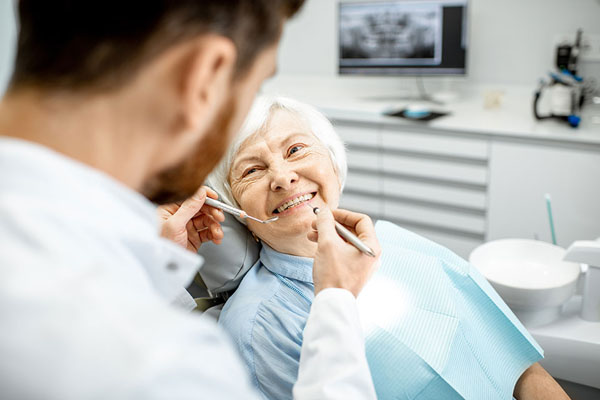
Most dental offices refer implant patients to outside specialists — often in Green Bay or beyond. At Algoma Family Dentistry, the vast majority of implant cases, from evaluation to surgery to final crown, are handled right here in our Algoma office. You don’t have to drive 45 minutes for a specialist consult or explain your case history to someone new.
Dr. Daniel Fama is a fellowship candidate with the International Congress of Oral Implantologists (ICOI) and has completed advanced surgical training through Restorative Driven Implants—a curriculum specifically focused on the intersection of surgical placement and final restoration outcomes. He works alongside Dr. Patti Sigl, who brings decades of family dentistry experience and continuity of care for patients throughout Kewaunee County and beyond.
Together, the team offers single-stage implant protocols (which eliminate the need for a second uncovering surgery), same-day extraction and implant placement in qualifying cases, and in-house bone grafting—services typically found only at larger specialty practices in metropolitan areas.
Am I a Good Candidate for Dental Implants? The Core Requirements
Successful implant treatment depends on meeting a few clinical standards that support osseointegration—the process by which your jawbone fuses to the titanium implant post. Here is what your implant dentist near you will evaluate:
- Fully developed jawbone: Implants require a mature skeleton. Most patients need to be at least 18 years old, though this varies. Younger patients are typically deferred until jaw development is complete.
- Adequate bone density: The implant needs solid bone to anchor into. Low bone volume doesn’t automatically disqualify you—bone grafting can rebuild the foundation—but your bone structure must be assessed before treatment begins.
- Healthy gums: Active gum disease (periodontitis) must be treated before implant placement. Untreated periodontal disease creates a bacterial environment that dramatically increases the risk of implant failure.
- Controlled overall health: Conditions like uncontrolled diabetes, autoimmune disorders, or certain medications can impair healing. Most systemic conditions don’t disqualify you outright, but they require careful management and coordination with your physician.
- Non-smoker or committed to quitting: Smoking significantly impairs the body’s ability to heal and integrate the implant. Patients who smoke are counseled to quit — or at minimum, to stop smoking during the healing period — to improve outcomes.
Quick Candidacy Checklist
You are likely a strong candidate for dental implants near you in Algoma if you:
- Are missing one or more teeth due to injury, decay, or gum disease
- Have a fully developed jawbone (typically age 18 or older)
- Have healthy gums with no active periodontal disease, or are committed to treating it
- Have adequate bone density, or are open to a bone graft
- Are a non-smoker or ready to stop smoking during the healing phase
- Are in reasonably good general health with no uncontrolled systemic conditions
- Are committed to good daily oral hygiene and regular professional checkups
If some of those conditions aren’t met right now, that doesn’t mean implants are off the table. It means there may be preparatory steps. Our team will walk you through exactly what that looks like at your consultation.
What About Bone Loss? Can I Still Get Dental Implants Near Me?
This is the most common reason patients assume they don’t qualify—and the most common misconception in implant dentistry.
When a tooth is lost, the jawbone in that area no longer receives stimulation from chewing. Without that signal, the bone begins to resorb (shrink)—sometimes significantly within the first year. Patients who have been living with a gap for several years often have meaningful bone loss at the site.
The good news is that bone grafting techniques have made implants accessible to patients who would have been ruled out a decade ago. At Algoma Family Dentistry, Dr. Fama performs bone grafting and augmentation procedures in-office as part of the implant process. In many cases, a graft can be placed at the same appointment as a tooth extraction, rebuilding the site before it loses volume. For patients with more significant loss, sinus lift procedures may be recommended to restore bone in the upper jaw.
The only way to know whether your bone density is sufficient or what grafting would be needed is a CBCT 3D imaging scan. We use cone-beam computed tomography right here in our Algoma office to assess bone volume, density, and nerve locations before we ever discuss a surgical timeline.
What Disqualifies Someone From Getting Dental Implants?
Absolute disqualifiers are rare. Most conditions that seem like deal-breakers are actually manageable with the right preparation. That said, there are factors that require serious clinical evaluation:
- Uncontrolled diabetes: Poorly managed blood sugar impairs wound healing and increases infection risk. Patients with well-controlled diabetes, however, are generally good candidates.
- Active cancer treatment: Radiation to the head and neck area can compromise bone healing. Implant placement is typically deferred until treatment is complete and the tissue has had time to recover.
- Certain bone medications (bisphosphonates): Patients taking bisphosphonates (often prescribed for osteoporosis) may face an increased risk of osteonecrosis. This requires careful evaluation, not automatic disqualification.
- Severe, uncontrolled gum disease: Active periodontitis must be fully treated before implant placement. Once the infection is controlled, implants become a viable option.
- Heavy smoking: Smoking doesn’t automatically rule out implants, but it significantly raises the failure risk. Patients are strongly counseled on cessation before surgery.
If you have any of these conditions, don’t self-diagnose your condition—bring it to us. Our doctors will coordinate with your physician when needed and give you an honest, personalized assessment.
How the Dental Implant Candidacy Evaluation Works at Our Algoma Dental Office
If you feel implant dentistry may be right for you, the first step is a comprehensive dental and radiographic examination with a full health history review conducted personally by Dr. Sigl or Dr. Fama. This isn’t a rushed screening. We take the time to understand your full clinical picture before making any recommendations.
What happens during your candidacy consultation:
- Complete health history review: We document current medications, medical conditions, and any prior dental work that could affect implant planning.
- CBCT 3D imaging: Cone-beam computed tomography gives us a precise 3D map of your bone density, bone volume, nerve locations, and sinus anatomy—far more detail than a standard X-ray alone. Dr. Fama was among the first in the Algoma area to bring CBCT technology into a general dental practice.
- Periodontal assessment: We evaluate gum health and check for any signs of active disease that would need to be treated before moving forward.
- Treatment planning discussion: Based on all findings, we explain your options clearly — whether that’s immediate implant placement, preparatory bone grafting, or an alternative like a dental bridge or denture if implants aren’t the right fit.
For cases requiring additional surgical expertise, we may refer you to a trusted oral and maxillofacial surgeon — but you’ll always remain under our care and coordination. Serving patients near you from Algoma, Kewaunee, Casco, Luxemburg, Sturgeon Bay, and Green Bay, our team works hard to keep your care local and continuous.
What Is the Timeline for Dental Implant Treatment Near You?
Understanding the full process helps patients plan around treatment rather than rearranging their lives for it. Here’s what a typical implant timeline looks like:
- Consultation and imaging (Week 1): CBCT scan, health history review, treatment planning.
- Preparatory care, if needed (Weeks 2–8): Bone grafting, periodontal treatment, or extractions, if required. Timing varies by case complexity.
- Implant placement surgery (Day 1 of surgical phase): Titanium post placed under local anesthesia. Most patients return to normal activities the following day.
- Osseointegration/healing (3–6 months): The bone fuses to the titanium. Your daily life is largely unaffected during this period; temporary restorations keep your smile intact.
- Final restoration (6–8 months total): Custom crown, bridge, or denture is seated. The result is virtually indistinguishable from natural teeth.
For patients with good bone density and no preparatory needs, the single-stage implant option can shorten this timeline — with a minimum healing period of just six weeks before the final restoration in qualifying cases.
Frequently Asked Questions
Yes, significantly. Smoking impairs blood flow and healing, which increases the risk of implant failure and infection. Patients who smoke are strongly counseled to quit, or at a minimum, to stop during the healing phase. It doesn’t automatically disqualify you, but it does raise the risk profile and should be discussed honestly at your consultation.
Algoma Family Dentistry serves patients from Algoma, Kewaunee, Casco, Luxemburg, Sturgeon Bay, Green Bay, and surrounding communities in Kewaunee County. Dr. Fama is ICOI-trained and performs the full implant process, evaluation, surgery, and restoration in one office, so you don’t need to travel to Green Bay for specialist referrals.
We use CBCT (cone-beam computed tomography) 3D imaging, which gives us a detailed, three-dimensional view of your jawbone density, bone volume, nerve locations, and sinus anatomy. Standard X-rays don’t provide this level of detail. CBCT imaging allows Dr. Fama to plan the exact implant position before any surgery begins.
For most patients, the full process takes six to eight months. The bulk of that time is the osseointegration (healing) phase of three to six months, during which you’ll wear a temporary restoration, and your daily life is largely unaffected. In qualifying cases, single-stage implants can shorten the timeline with a healing period as short as six weeks.
There is generally a minimum age — the jawbone must be fully developed, which typically occurs around age 18. There is no upper age limit. Many older adults are excellent candidates, and modern bone grafting techniques have made implants viable for patients who have experienced significant bone loss from decades-long tooth gaps.
A failed implant doesn’t automatically prevent future placement. The key is understanding why the first implant failed — whether due to infection, inadequate bone, poor oral hygiene, or another factor. Once the site has healed and the underlying cause is addressed (which may include bone grafting), a new implant can often be placed successfully. Bring your treatment history to your consultation, and we’ll evaluate the site directly.
Are You a Candidate? Let’s Find Out at Algoma Family Dentistry.
A missing tooth doesn’t have to be permanent, and not qualifying shouldn’t be an assumption. Whether you’ve been living with a gap for years or just lost a tooth recently, the implant dentists near you at Algoma Family Dentistry are ready to give you a real, clinically grounded answer about your candidacy.
Call our Algoma dental practice at (920) 487-2733 or schedule online. We serve patients throughout Algoma, Kewaunee, Casco, Luxemburg, Sturgeon Bay, Green Bay, and surrounding Kewaunee County communities.