
What to Expect at Every Step of Your Whitening Process
If you’ve never had professional teeth whitening before—or you’ve had a bad experience with sensitivity from an over-the-counter kit—knowing exactly what’s going to happen can make all the difference. At Algoma Family Dentistry, Dr. Daniel Fama and Dr. Patti Sigl walk every patient through the process before it starts, so there are no surprises in the chair. This page covers the full ZOOM! whitening procedure from your first evaluation through post-treatment aftercare—so you know exactly what you’re getting into and what to do once you leave.
We serve patients in Algoma, Bruemmerville, Forestville, and Alaska, WI. Our office is located at 1421 Lake St., Algoma, WI 54201. Questions before your appointment? Call our Algoma dental practice at (920) 487-2733 to get started.
Before the Procedure: Your Evaluation and Shade Assessment
The whitening procedure doesn’t begin the moment you sit down in the chair. The first thing Dr. Fama or Dr. Sigl does is a thorough evaluation of your teeth and gums—and this step matters more than most patients realize. It’s what separates professional whitening from a kit you’d buy at a pharmacy.
What We Check During Your Evaluation:
- Cavities and gum health: Active decay or gum disease needs to be treated before whitening. Applying whitening gel over a compromised tooth or inflamed gum tissue can cause pain and make existing problems worse. We won’t skip this step.
- Existing dental restorations: Dental crowns, porcelain veneers, dental fillings, and dental bonding on visible front teeth don’t respond to whitening gel—only natural enamel does. We identify these upfront so you have accurate expectations about your final result.
- Type of staining: There are two types of tooth discoloration, and they respond differently to treatment.
- Extrinsic stains: Surface discoloration from coffee, tea, wine, and tobacco respond quickly and dramatically to whitening.
- Intrinsic stains: Deeper discoloration from aging, certain antibiotics, or fluorosis—can improve but typically require more sessions or may have limits on how much they lighten. Dr. Fama or Dr. Sigl will be upfront about which one you have.
- Your starting shade: We record your current shade using a clinical shade guide. This is how we measure your actual results at the end, and it’s nice to have a documented before-and-after comparison.
Why This Step Matters: Skipping a proper evaluation is one of the biggest reasons patients have bad experiences with whitening—either from unexpected sensitivity, uneven results, or being disappointed that a crown didn’t whiten. A five-minute evaluation prevents all of that.
Preparing Your Teeth for Whitening at Algoma Family Dentistry
Once your evaluation is complete and Dr. Fama or Dr. Sigl has confirmed you’re a good candidate for whitening, the preparation phase begins. This is the step most at-home kits entirely skip, and it’s one of the primary reasons professional whitening is more comfortable and more effective.
Cleaning and Polishing
Before any whitening agent is applied, your teeth receive a professional cleaning to remove plaque, tartar buildup, and surface debris. This matters because whitening gel needs direct, unobstructed contact with the enamel surface to work effectively. Gel applied over a biofilm of plaque produces uneven, patchy results and can cause excess sensitivity.
Protecting Your Gum Tissue
This is the most important preparation step — and the one that most directly prevents sensitivity and irritation. Here’s exactly what we do:
- A lip and cheek retractor is placed to gently hold soft tissue away from your teeth and keep everything stable throughout the procedure.
- A protective barrier gel is applied directly to the gum line along every tooth being treated. This creates a physical seal between the whitening gel and your gum tissue.
- Once the barrier is set, your entire gum line is shielded from direct contact with the hydrogen peroxide gel.
Patients who experience gum irritation after using OTC whitening products almost always do so because the strip or tray allowed the gel to contact the gums. With the in-office barrier protocol, that’s not possible.
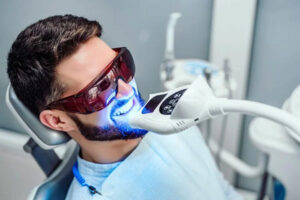
The ZOOM! Whitening Procedure — Step by Step
Algoma Family Dentistry uses the ZOOM! Whitening system—one of the most clinically validated in-office whitening technologies available. Here’s exactly what happens once preparation is complete.
Application of the Whitening Gel
The ZOOM! hydrogen peroxide gel is carefully applied to every visible tooth surface. The concentration used is calibrated based on your sensitivity level and the type of staining identified during your evaluation. The gel works through a process called controlled oxidation: the hydrogen peroxide penetrates the porous enamel and dentin layers of the tooth and chemically breaks down the large, light-absorbing pigment molecules responsible for yellow, brown, and gray discoloration.
This isn’t an abrasive process—the whitening gel does not scratch or thin enamel. It chemically dissolves stain compounds while leaving the physical structure of the tooth intact. This is a critical distinction from whitening toothpastes, which rely on mild abrasion to remove surface stains and cannot reach deeper discoloration the way peroxide gel can.
LED Light Activation
Once the gel is applied, the ZOOM! LED lamp is positioned directly in front of your teeth. The lamp emits a specific wavelength of light that activates the hydrogen peroxide gel and significantly accelerates the oxidation reaction—producing results faster than gel alone could achieve. This is the defining feature of the ZOOM! system and the reason it delivers such dramatic same-day results.
The light doesn’t heat your teeth. You may feel a mild tingling or cool sensation during activation—this is normal and expected. Most patients describe the experience as unremarkable; they sit back, relax, and let the procedure run.
Gel Refresh Cycles
The full ZOOM! treatment consists of three separate 15-minute activation cycles. After each cycle:
- The existing gel is removed from your teeth.
- Your teeth are briefly evaluated.
- A fresh application of whitening gel is applied.
- The LED lamp activates the new layer for another 15 minutes.
The reason for multiple cycles rather than one long application is both safety and efficacy. Short, controlled bursts of activation allow the gel to work effectively without over-exposing the tooth surface. It also lets us assess how your teeth are responding and adjust if needed.
Total Chair Time: The three gel cycles, plus preparation and finishing, typically bring your total appointment time to 60–75 minutes. Plan for about 90 minutes to be comfortable, though most patients are done and out the door in under an hour.
Final Gel Removal, Rinse, and Shade Check
After the third and final cycle, the whitening gel is completely removed from your teeth, and your mouth is thoroughly rinsed. Dr. Fama or Dr. Sigl then evaluates your final shade against the shade recorded at the start of your appointment.
This is the moment most patients are genuinely surprised—seeing the documented difference between where you started and where you ended. Most patients see 3 to 8 shades of improvement. The actual result depends on your starting shade, the type of staining, and how your enamel responds, all of which were assessed during your evaluation.
Post-Whitening Desensitizing Treatment
The final step of the in-office procedure is a post-whitening fluoride or desensitizing treatment applied directly to your teeth. This is not optional—it’s a standard part of the ZOOM! protocol and one of the most effective ways to minimize post-treatment sensitivity.
The desensitizing agent works by temporarily sealing the open pores of the enamel (called dentinal tubules) that were exposed during the whitening process. Closing these pores reduces the transmission of temperature changes to the nerve of the tooth, which is the primary cause of post-whitening sensitivity.
After this step, you’re done. The procedure is complete. You’ll leave Algoma Family Dentistry with a noticeably brighter smile the same day—and specific aftercare instructions to protect your results.

Teeth Whitening Aftercare — What to Do in the First 48 Hours
The 48 hours immediately following your whitening treatment are the most important window for protecting your results and managing any sensitivity. Your enamel pores remain slightly open during this period, which means your teeth are more susceptible to re-staining and more sensitive to temperature extremes than they normally would be.
The ‘White Diet’ — What to Eat and Avoid
For the first 48 hours after your whitening procedure, we recommend following what dentists call a “white diet”—avoiding any food or drink that could stain a white shirt. This means:
- Avoid: coffee, tea, red wine, dark sodas, fruit juices, berries, tomato sauce, soy sauce, balsamic vinegar, and any brightly pigmented sauces or foods.
- Avoid: tobacco in any form. Smoking or chewing tobacco immediately after whitening will re-stain your teeth rapidly and significantly reduce how long your results last.
- Safe to eat: white or light-colored foods — chicken, fish, rice, pasta with white sauce, bananas, apples (peeled), cauliflower, white cheese, plain yogurt, eggs.
- Safe to drink: water, plain milk, clear sparkling water, coconut water.
The 48-hour window is critical. After that, your enamel pores have resealed, and your normal staining resistance resumes. That said, the less staining exposure in the first week, the better your long-term results.
Managing Sensitivity After Whitening
Some degree of tooth sensitivity in the 24–72 hours following whitening is normal and expected. It typically presents as brief, sharp sensitivity to cold drinks, cold air, or sweet foods. Here is how to manage it:
- Use a desensitizing toothpaste: Switch to a potassium nitrate toothpaste such as Sensodyne for at least two weeks after your treatment. Brush gently — don’t scrub.
- Avoid temperature extremes: Skip very hot coffee or tea and very cold ice water for 48 hours. Room-temperature or lukewarm beverages are fine.
- Avoid whitening toothpaste immediately after: Whitening toothpastes contain mild abrasives that can irritate the temporarily open enamel. Hold off for at least one week.
- Take OTC pain relief if needed: If sensitivity is uncomfortable, ibuprofen or acetaminophen at standard doses can help. This is rarely necessary but available if you need it.
Sensitivity that persists beyond 72 hours, intensifies rather than fades, or affects a single tooth significantly more than others is worth a call to our office. Call Algoma Family Dentistry at (920) 487-2733, and we will assess whether what you’re experiencing is normal post-treatment sensitivity or something that needs attention.
Ongoing Aftercare — Making Your Results Last
The procedure itself gets your teeth to their new shade. What you do afterward determines how long that shade stays. Here’s what actually moves the needle on whitening longevity:
- Rinse After Staining Foods and Drinks: You don’t have to give up coffee forever. But rinsing your mouth with plain water immediately after your morning cup dramatically reduces how much pigment settles into the enamel. The key is doing it right away — within a few minutes — before the staining compounds have time to bind to the tooth surface. This single habit, done consistently, is one of the most effective maintenance strategies available.
- Keep Your Regular Cleaning Appointments: Professional cleanings at Algoma Family Dentistry remove the surface plaque and tartar buildup that traps staining compounds against your teeth. Patients who skip cleanings consistently see their whitening results fade faster than those who come in every six months. Maintaining your regular schedule with Dr. Fama or Dr. Sigl in Algoma is one of the most straightforward ways to extend your results without any extra effort.
- Use Your Custom Take-Home Trays for Touch-Ups: If you received custom take-home whitening trays as part of your treatment plan, these are your best tool for maintenance. A single overnight application every three to four months is usually enough to keep your shade from drifting. Do not use them more frequently than recommended—over-whitening can temporarily increase sensitivity without improving results.
- Use Whitening Toothpaste—But Not Daily: A whitening toothpaste used two to three times per week helps remove fresh surface staining before it becomes embedded. Used daily, however, the mild abrasives in whitening toothpastes can gradually affect enamel surface texture over time. Alternating with a fluoride or sensitivity toothpaste is the better approach.
- How Long Results Typically Last: Most patients who follow basic aftercare instructions maintain their results for six months to two or more years. The biggest factors are tobacco use (shortens results significantly), daily coffee or red wine consumption (moderate impact with proper rinsing habits), and oral hygiene consistency. Patients who come in for regular cleanings and use their take-home trays seasonally often report their results lasting well beyond a year.
Frequently Asked Questions
The in-office ZOOM! whitening procedure itself takes approximately 45 to 60 minutes. When you include the preparation steps — evaluation, cleaning, and gum protection — and the post-treatment desensitizing application, plan for 60 to 90 minutes total for your appointment. Most patients are done in under 75 minutes.
Most patients experience little to no discomfort during the procedure itself—typically a mild tingling sensation during the LED activation cycles. Post-procedure sensitivity to cold or sweet foods and drinks is common and usually resolves completely within 24–72 hours. Patients who know they have sensitive teeth should let us know before the appointment—we can adjust the gel concentration and cycle protocol and apply desensitizer between cycles to minimize any discomfort.
No special preparation is required the night before. If you have a history of significant tooth sensitivity, starting a potassium nitrate desensitizing toothpaste (like Sensodyne) two weeks before your appointment can meaningfully reduce sensitivity during and after the procedure—but this is optional and can be discussed at your consultation. Otherwise, brush and floss normally and arrive with clean teeth.
For the first 48 hours, avoid dark or highly pigmented foods and drinks — coffee, tea, red wine, tomato sauce, berries, and tobacco. Your enamel pores are temporarily open during this window, making your teeth more susceptible to re-staining. After 48 hours, your normal staining resistance returns. The more you limit staining exposure in that first window, the longer your results will hold.
Results from the ZOOM! in-office procedure are visible immediately when the gel is removed after your final cycle. Your final shade is assessed and compared to your documented starting shade at the end of the appointment. You will leave with a noticeably brighter smile the same day—not days later.
Yes. The ZOOM! whitening process uses controlled oxidation—a chemical reaction that breaks down stain molecules inside the enamel without thinning, scratching, or physically damaging the tooth structure. Dr. Fama and Dr. Sigl conduct a thorough evaluation before every whitening treatment to ensure your enamel is healthy enough to proceed. Post-treatment fluoride application helps remineralize and close the enamel surface after the procedure.
Ready to Schedule Your Whitening Appointment in Algoma?
Dr. Fama and Dr. Sigl are happy to answer any questions about the procedure before you book. Call our Algoma dental office at (920) 487-2733 to schedule your consultation. Algoma Family Dentistry is located at 1421 Lake St., Algoma, WI 54201. Serving Algoma, Bruemmerville, Forestville, and Alaska, WI.