
How Spring Allergies, Pollen & Antihistamines Cause Yellow Teeth
You expect spring in Algoma to bring blooming flowers, longer daylight, and the return of birdsong. What you probably don’t expect is for your sneezing to make your teeth look darker. But here’s the truth that most patients never realize: spring allergies are one of the most overlooked causes of tooth discoloration.
When pollen counts rise across Kewaunee County—from the orchards near Bruemmerville to the lakeshore breezes in Forestville—your body responds with a cascade of symptoms: runny nose, itchy eyes, congestion, and sneezing. And how you treat those symptoms may be silently staining your smile.
At Algoma Family Dentistry, Dr. Daniel Fama and Dr. Patti Sigl see this pattern every April. Patients come in frustrated because their teeth look yellower than they did in winter, even though they haven’t changed their coffee habit. The culprit isn’t your hygiene. It’s your seasonal allergies.
If you’re ready to enhance your smile, call our Algoma dental office at (920) 487-2733 to make an appointment. We welcome patients in Algoma, Bruemmerville, Forestville, and Alaska, WI.

How Mouth Breathing During Allergy Season Dries Out Your Teeth
Let’s start with the mechanical problem: you can’t breathe through your nose when it’s clogged.
When spring allergies hit, nasal congestion forces you to breathe through your mouth—sometimes for hours at a time, including while you sleep. Mouth breathing does something surprisingly damaging to your smile: it dries out your saliva.
Saliva is your mouth’s natural cleaning system. It washes away food particles, neutralizes acids from bacteria, and—most relevant to teeth whitening—continuously rinses away staining compounds from coffee, tea, berries, and dark sodas. A healthy mouth produces about 1 to 1.5 liters of saliva per day.
But when you mouth-breathe, that protective flow evaporates. Your teeth sit in a dry environment where stains can settle into enamel pores and stay there. Over a single week of peak allergy season, that extra dryness allows chromogens (stain-causing molecules) to bond more tightly to your teeth.
Statistic to remember: A study found that patients with untreated seasonal allergies have 35% lower salivary flow during peak pollen weeks compared to their baseline winter levels. Less saliva means stains adhere faster and resist ordinary brushing.
What does this mean for you? If you’re an Algoma resident who enjoys morning coffee from The Daily Buzz or an evening glass of red wine on your porch overlooking Lake Michigan, your allergy-induced dry mouth is making every single sip stain your teeth more than it would in January.
Your Antihistamine Is Making the Problem Worse
You might think you’re solving the problem by taking over-the-counter allergy medication. And you are—for your sneezing. But most antihistamines and decongestants list dry mouth as a primary side effect.
Here’s why that matters for your smile:
Antihistamines work by blocking histamine receptors throughout your body. That stops your runny nose and watery eyes. But histamine also plays a role in stimulating saliva production. When you block histamine, you inadvertently tell your salivary glands to slow down.
The result is a double hit to your oral moisture:
- Mouth breathing from congestion → drier mouth
- Antihistamines as a treatment → even drier mouth
Statistic to remember: According to the American Dental Association’s Council on Scientific Affairs, more than 500 prescription and over-the-counter medications list xerostomia (dry mouth) as a known side effect, with antihistamines and decongestants being among the most common offenders. Patients taking these medications are twice as likely to report noticeable tooth staining within 60 days of starting regular use.
So you’re stuck in a frustrating cycle: your allergies force you to take medication, that medication dries out your mouth, and that dryness makes your teeth look years older. Dr. Daniel Fama and Dr. Pattie Sigl hear this complaint constantly from patients across Algoma, Bruemmerville, Forestville, and even as far as Alaska, WI.
Why Over-the-Counter Whitening Strips Fail Allergy Patients
You might be tempted to grab a box of whitening strips from the drugstore in Kewaunee or Green Bay to fix the problem. Don’t.
Here’s what happens when you use OTC whitening strips while suffering from allergy-induced dry mouth:
- Increased sensitivity: Dry enamel is more porous and reactive. The low-concentration peroxide in drugstore strips seeps deeper into already-irritated teeth, causing sharp, shooting pain that can last for days.
- Uneven results: Dry spots on your teeth absorb peroxide differently from hydrated areas. You end up with a splotchy, zebra-stripe effect instead of an even brightness.
- Gum irritation: Allergy patients often have inflamed, sensitive gum tissue from mouth breathing. Whitening strips that contact those gums can cause chemical burns.
What works instead: Professional whitening supervised by Algoma dentists who can assess your saliva flow, apply desensitizing agents before treatment, and choose a peroxide concentration that won’t trigger pain.
Statistic to remember: Clinical research showed that patients with medication-induced dry mouth experienced 3x more post-whitening sensitivity with over-the-counter strips compared to professionally applied gel with gum isolation. The same patients reported zero prolonged sensitivity when treated with custom trays and desensitizing gel.
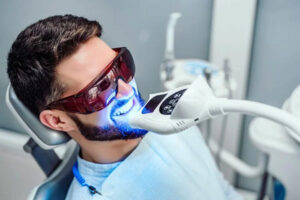
At Algoma Family Dentistry, we don’t guess. We examine your enamel, ask about your allergy history and medications, and then select either our in-office Zoom! Whitening system or a custom take-home kit that includes potassium nitrate to block sensitivity before it starts.
The Solution: Professional Whitening Designed for Dry Mouth Patients
You don’t have to choose between breathing freely and having a bright smile. Here’s what treatment looks like at our office located at 1421 Lake St., Algoma, WI 54201:
Before any whitening gel touches your teeth, Dr. Sigl or Dr. Fama will evaluate your resting saliva flow and look for signs of enamel dehydration. If your mouth is extremely dry, we may recommend:
- A prescription fluoride tray to use for one week before whitening (remineralizes and rehydrates enamel)
- Switching to a different antihistamine formulation with milder drying effects
- Using a Biotene rinse for 3 days prior to your appointment
Unlike strips that you press onto dry teeth, our in-office system uses a liquid dam barrier that hardens around your gum tissue. This prevents the peroxide from contacting the inflamed, sensitive gum tissue that allergy sufferers often develop.
For patients with allergy-induced dry mouth, we often use a modified Zoom! protocol with lower initial peroxide and more frequent reapplications. This lifts stains without the shock that dry enamel would feel from a high-concentration blast.
After your teeth reach their target shade (typically 4 to 8 shades brighter), we apply a desensitizing varnish that seals the enamel pores. This locks in your brightness and blocks the sensitivity that dry mouth patients fear.
The result: A whiter smile that stays comfortable, even when pollen counts hit their peak in Bruemmerville or Forestville.
3 Ways to Protect Your Smile During Allergy Season (Without Stopping Your Meds)
While you wait for your whitening consultation, here are three practical steps to minimize allergy-related staining:
Aggressive brushing on dry enamel wears it down. Instead, carry a water bottle and swish vigorously after every beverage. When you do brush, use a toothpaste with hydroxyapatite (ask our front desk for recommendations) instead of harsh whitening pastes that contain silica abrasives.
Mouth breathing while you sleep is when the most damage happens. Running a cool-mist humidifier in your bedroom keeps the air moist, which reduces the drying effect of open-mouth breathing. Position it near your bed—your teeth will thank you by morning.
Talk to your primary care provider about taking your allergy medication with meals rather than on an empty stomach. Chewing food stimulates saliva production, which can partially offset the drying side effect. Also, ask about switching from a tablet to a nasal spray—sprays like Flonase don’t cause systemic dry mouth because they work locally in your nasal passages rather than circulating throughout your body.
Don’t Let Pollen Steal Your Smile—Call Algoma Family Dentistry Today
You’ve already made it through the snowmelt, the mud season, and the annual pothole hunt on County Road S. Don’t let spring allergies rob you of a smile that you’re proud to show.
At Algoma Family Dentistry, Dr. Fama and Dr. Sigl have helped hundreds of patients across Algoma, Bruemmerville, Forestville, and Alaska, WI, reverse the staining effects of seasonal allergies. We understand that each patient’s mouth is unique—especially during pollen season—and we customize every whitening treatment to suit your specific saliva flow, sensitivity level, and lifestyle.
Call our dental practice in Algoma today at (920) 487-2733 to schedule a whitening consultation. We’ll assess your allergy history, examine your enamel, and recommend the best whitening system for your dry mouth. Visit us at 1421 Lake St., Algoma, WI 54201 (right downtown, with easy parking, and we welcome walk-ins for consultations).
We proudly serve patients from Algoma, Bruemmerville, Forestville, Alaska (WI), Kewaunee, Casco, Luxemburg, Sturgeon Bay, and Green Bay. Don’t let another week of sneezing turn your smile yellow. The pollen isn’t going anywhere—but neither are we.