
A Fresh Start for Your Smile
It’s mid-February, and W-2s are likely arriving or already arrived in mailboxes, signaling the start of tax refund season for millions of Americans. For many in Algoma, Bruemmerville, Forestville, and Alaska, WI, this is a chance to address dental needs they’ve postponed, particularly by investing in dental implants.
At Algoma Family Dentistry, Dr. Daniel Fama and Dr. Pattie Sigl guide patients on this decision every tax season. Dental implants are a lasting investment that can pay off for years to come.
This post highlights why tax season is the perfect time to consider dental implants and encourages scheduling a consultation. If you’re ready to enhance your smile, call our Algoma dental office at (920) 487-2733 to make an appointment.
The Tax Refund Opportunity You Might Not Have Considered
Consider this: the average federal tax refund in the U.S. is about $3,000, according to IRS data. For many households, it’s unexpected money that isn’t already allocated, making it powerful.
The main barrier to getting dental implants has been the upfront cost. Many people can’t afford this elective treatment from their monthly budget. However, a tax refund can change that. It allows access to funds that can cover all or part of a dental implant.
Tax refunds typically arrive between February and April, so now is the time to plan. Patients who consult in February and March can often start their implant process before the refund is spent on other things.
Think of it as a yearly financial reset, an opportunity to invest in something that can truly enhance your life.
Why Dental Implants Are an Investment, Not Just a Purchase
Let’s be clear about something: spending your tax refund on dental implants is not a splurge. It’s one of the most cost-effective, health-forward decisions you can make for your long-term well-being. Here’s why.
Unlike other tooth replacement options, dental implants are not a temporary fix. With proper care and regular dental visits, implants can last 20 years—and often a lifetime. Clinical studies have shown implant survival rates exceeding 95% at the 10-year mark. When you compare that to dental bridges or dentures, which typically need to be replaced every 5 to 15 years, the long-term math strongly favors implants.
Many people view a missing tooth as just a cosmetic issue, but it can have serious health consequences. The American College of Prosthodontists reports that around 120 million Americans are missing at least one tooth, often without realizing the effects.
A missing tooth causes surrounding teeth to shift, leading to misalignment and bite problems. It also results in bone loss beneath the missing tooth, which can alter facial shape and complicate future dental procedures. Additionally, the gap can increase the risk of gum disease due to bacterial buildup.
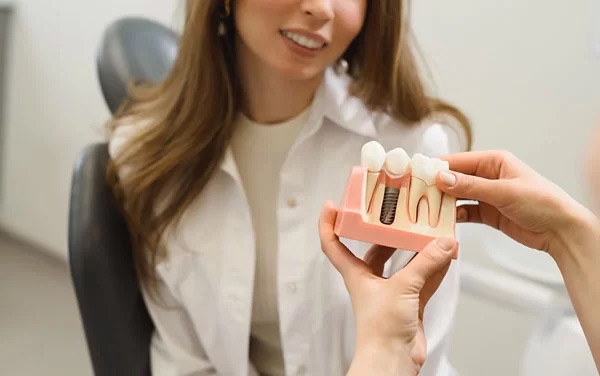
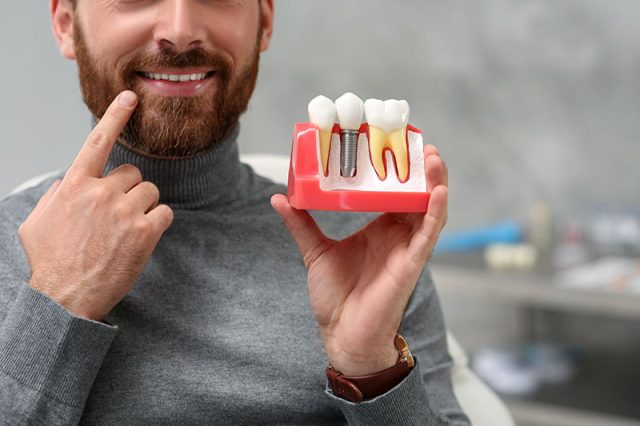
Dental implants address these issues by replacing the tooth root with a titanium post, stimulating the jawbone, and maintaining facial structure. They prevent neighboring teeth from shifting and are easy to care for with regular brushing, flossing, and checkups.
The longer you wait to replace a missing tooth, the more complex and costly the solution becomes. Bone loss may eventually require bone grafting before an implant can even be placed. Shifting teeth can lead to crowding and alignment issues that require additional treatment.
What might be a straightforward implant procedure today can become a much more involved—and expensive—process in a few years. Acting now, while you have the financial means through your tax refund, can be the smarter move.
What Does a Dental Implant Actually Cost? Setting Honest Expectations
We know cost is a primary concern, so let’s address it directly.
The total cost of a dental implant varies based on factors like the number of teeth replaced, any necessary preparatory treatments, and your insurance coverage. We recommend scheduling a consultation with Dr. Fama or Dr. Sigl for a personalized estimate.
A tax refund of $2,500–$3,000 can significantly help cover a single implant, especially when combined with dental insurance and financing options. For those needing multiple implants, a partial payment from a refund can serve as a down payment, making the process more manageable.
Having this conversation early is essential. A consultation at Algoma Family Dentistry is your first step to understanding your treatment and costs.
Maximize Your Insurance Benefits—and Layer in Financing
Many patients may not realize that dental insurance benefits reset at the start of the calendar year. Since it’s February, you have a full year’s worth of coverage available.
While dental insurance may not cover the implant post directly, it often covers related procedures like tooth extractions, bone grafting, and crowns. Combining these covered amounts with your tax refund can significantly reduce out-of-pocket costs.
Algoma Family Dentistry also provides financial options to make treatment accessible. Our team can help you understand your specific coverage and financing arrangements that fit your needs. Together, a tax refund, active insurance benefits, and available financing can make dental implants achievable after years of postponement.
Why February and March Are the Ideal Time to Start
Timing is crucial when it comes to dental implants, which typically take six to eight months from consultation to final crown placement. Patients starting the process now can expect a confident, restored smile by late summer or early fall.
Consider the advantages: summer cookouts, family reunions, and trips to Door County are all more enjoyable without concerns about your smile. Additionally, late winter is a quieter time at the dental office, offering better scheduling flexibility compared to the busier spring and summer months.
February also brings a sense of renewal and motivation to prioritize self-care. Don’t let the new year energy fade—take action now!
Your Refund. Your Smile. Your Year.
Tax refund season doesn’t last forever. Neither does the window of early-year motivation that makes change feel possible. If you’ve been thinking about dental implants—and you’ve been putting it off for months or even years—this is your moment.
At Algoma Family Dentistry, Dr. Daniel Fama and Dr. Patti Sigl are proud to serve patients from Algoma, Bruemmerville, Forestville, Alaska, WI, and the surrounding Kewaunee County communities. We’re here to help you make the most of this season—with a consultation that’s informative, pressure-free, and focused entirely on what’s right for you.
Call our dental practice in Algoma today at (920) 487-2733 to schedule your dental implant consultation. We’re conveniently located at 1421 Lake St., Algoma, WI 54201, and our team is ready to help you take the first step toward the smile you deserve.
Don’t let another year go by. Your refund is ready. We’re ready. Let’s get started.