Missing a Tooth? The Spring 2026 Guide to Dental Implants
One hundred and seventy-eight million. That’s not a distant statistic—it’s roughly the combined population of every person living in California, Texas, Florida, New York, and Pennsylvania. According to research, many Americans are currently missing at least one tooth.
If you’re one of them, you already know the subtle ways a missing tooth changes daily life. You favor one side when you chew. You hold back in photos. Maybe you’ve been told something like “we can look at it next year”—and next year quietly became a few years ago.
This spring, it’s worth taking a closer look at what’s actually happening beneath that gap — and whether dental implants in Algoma, WI are the answer you’ve been putting off finding out about.
If you’re ready to enhance your smile, call our Algoma dental office at (920) 487-2733 to make an appointment. We welcome patients in Algoma, Bruemmerville, Forestville, and Alaska, WI.
The Scale of the Problem — And Why It’s So Easy to Ignore
Tooth loss is far more common than most people realize. The numbers are striking:
- 178 million Americans are missing at least one tooth
- 40 million Americans have lost all of their natural teeth in one or both jaws
- Nearly 70% of adults between the ages of 35 and 44 have lost at least one permanent tooth
- By age 50, the average American has lost approximately 12 teeth, including wisdom teeth
Yet most people don’t treat a missing tooth with the same urgency they’d give to a cracked rib or a torn ligament. The reason is simple: it doesn’t hurt. Once a tooth is gone, the nerve goes with it. There’s no pain signal—nothing pushing you to make an appointment.
That silence is part of the problem.
Spring is the season people take stock of things they’ve been putting off. Health decisions tend to surface this time of year—not because of any medical deadline, but because a new season carries a natural sense of reset. If a missing tooth has been sitting on your mental to-do list, this post is for you.

Why a Missing Tooth Is More Than a Cosmetic Problem
Most patients think of a missing tooth as a cosmetic issue: a gap in the smile, a confidence hit in photos. The reality is more significant than that, and it starts happening long before anyone notices a visible change.
Your jawbone needs a tooth root to stay healthy.
When a natural tooth root is present, the everyday forces of chewing transmit stimulation down into the bone. That stimulation is what tells your body to keep producing and maintaining bone tissue in that area. When the tooth and its root are gone, that signal disappears.
What happens next is called bone resorption, and it begins within weeks of an extraction — not years. Research confirms that the most rapid bone loss occurs during the first three to six months after a tooth is removed. Studies citing data from the National Institute of Dental and Craniofacial Research show that patients can lose more than 25% of jawbone width in the first year alone.
Over time, that bone loss does more than complicate future dental treatment:
- Neighboring teeth begin to drift and tilt toward the open space, disrupting bite alignment and increasing wear on surrounding teeth
- The jawbone shrinks in height and width, which can visibly change the lower third of the face, creating a sunken or aged appearance that no amount of skincare addresses
- The longer the gap remains, the more likely a bone graft will be required before an implant can be placed—adding both cost and healing time to the process
A missing tooth isn’t just a gap in your smile. It’s an opening in your jawbone that quietly gets wider every month it goes untreated.
So, Why Aren’t More People Getting Dental Implants?
Given the scale of tooth loss in this country, it’s fair to ask why implants aren’t already universal. The data tells an interesting story.
Despite roughly 178 million Americans having at least one missing tooth, only about 25% of people who are fully edentulous (missing all teeth) currently utilize dental implants, with cost cited as the primary barrier.
But adoption is moving in one direction: up. Research found that implant prevalence among adults with missing teeth grew from 0.7% in 1999–2000 to 5.7% in 2015–2016, and the same study projected that number could climb to as high as 23% by 2026 as patient awareness improves and implant technology becomes more accessible.
The barriers that keep most patients on the sidelines come down to three things:
- Cost. A single implant in Wisconsin typically ranges from $3,000 to $6,000. That’s a real number—but it’s also worth comparing against the lifetime cost of dentures that need replacement every 7–15 years, or the compounding expense of bone grafts and complications that come with waiting. For many patients, implants are the more cost-effective choice over a 20-year window. Financing options and partial insurance coverage can also make the upfront cost more manageable than most people expect.
- Fear of surgery. Dental implant placement is performed under local anesthesia. Most patients report feeling pressure, not pain, during the procedure, and the majority return to normal activities the following day. Post-operative soreness is typically manageable with over-the-counter pain relief.
- “I was told I’m not a candidate.“ This is the objection that surprises people most. Advances in bone grafting have expanded implant candidacy significantly over the past decade. Patients who were ruled out years ago or who assume bone loss disqualifies them often discover they’re actually eligible after a proper evaluation. The only way to know for certain is a personalized consultation with an implant-trained dentist.
What Makes Dental Implants Different from Bridges and Dentures
There are three main options for replacing a missing tooth, and they are not created equal.
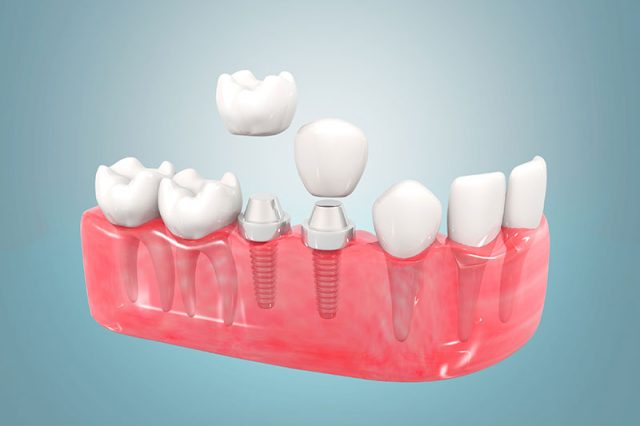
- Dental implants are the only tooth replacement option that addresses the root of the problem — literally. A titanium post is surgically placed into the jawbone, where it fuses with the bone through a natural process called osseointegration. This restored stimulation stops bone resorption and creates a foundation as stable as a natural tooth root. The crown placed on top is custom-matched to your surrounding teeth in size, shape, and shade. Most people cannot tell the difference.
- Dental bridges are a fixed alternative that can restore a visible tooth, but to place a bridge, the two healthy teeth on either side of the gap must be permanently ground down to serve as anchors. Those teeth are altered for life. Bridges also don’t address bone loss beneath the gap, meaning the jawbone continues to shrink even after restoration.
- Dentures offer a lower upfront cost and can replace multiple or all missing teeth, but they sit on top of the gums rather than anchoring into the bone. Over time, the pressure from dentures can actually accelerate bone resorption, which is why dentures tend to fit less well as years pass and the underlying bone changes shape. They require daily removal, cleaning, adhesive, and periodic replacement.
Patient satisfaction data support the difference: over 90% of dental implant patients report being completely satisfied with their outcomes—a number that reflects not just aesthetics, but restored function, comfort, and confidence.
Are You a Candidate? What the Evaluation Looks Like at Algoma Family Dentistry
This is where national statistics meet your specific situation — and where most patients discover the answer is more encouraging than they expected.
Strong candidates for dental implants typically share these characteristics:
- Missing one or more teeth due to injury, decay, or gum disease
- Adequate bone density, or willingness to undergo a bone graft to build it up
- Healthy gums with no active periodontal disease
- Non-smoker, or committed to quitting during the healing period
- Fully developed jaw (generally age 18 and older)
- Consistent oral hygiene habits and a commitment to regular checkups
Even if you’ve been told in the past that you’re not a candidate — particularly due to bone loss — that assessment may be outdated. The evolution of bone grafting techniques has brought implants within reach for patients who would have been ruled out a decade ago.
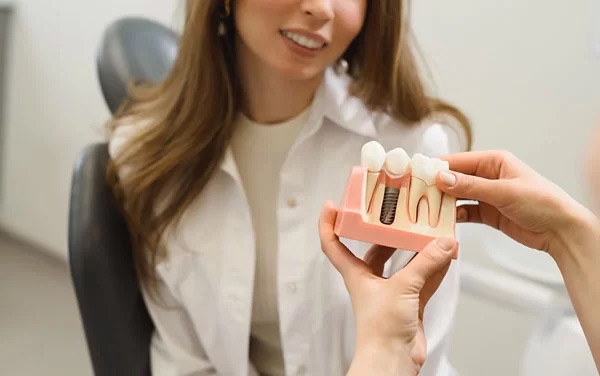
At Algoma Family Dentistry, located at 1421 Lake St., Algoma, WI 54201, the evaluation process is thorough and unhurried. Dr. Daniel Fama is a Fellowship Candidate with the International Congress of Oral Implantologists (ICOI) and has completed extensive surgical and restorative implant training through the Restorative Driven Implants curriculum. Dr. Patti Sigl brings decades of family dentistry experience and works alongside Dr. Fama to coordinate care from start to finish.
Why Choose Algoma Family Dentistry for Dental Implants
What makes the practice distinctive as dentists in Algoma, WI, is the technology and the scope of care available under one roof:
- CBCT 3D Imaging. Before any incision is made, Dr. Fama uses cone-beam computed tomography — the same 3D imaging technology found at major oral surgery centers — to map your bone density, identify nerve locations, and plan precise implant positioning in three dimensions. This level of pre-surgical planning significantly reduces guesswork and improves outcomes.
- Everything in one office. Most patients complete the entire implant process — from consultation to final crown — without leaving Algoma Family Dentistry. No referrals to a specialist in Green Bay. No explaining your case history to a new provider mid-treatment. Dr. Fama and Dr. Sigl coordinate both the surgical and restorative phases, which means your care is continuous, cohesive, and handled by a team that knows you.
We welcome patients from Algoma, Bruemmerville, Forestville, and Alaska, WI, as well as surrounding communities throughout Kewaunee County and the greater Green Bay area.
Spring Is a Smart Time to Start — Here’s Why
Here’s something most patients don’t know when they first learn about implants: the majority of the six-to-eight-month treatment timeline is passive waiting — not active treatment.
After the implant post is placed, a healing phase called osseointegration takes place over three to six months. During this time, the bone gradually fuses to the titanium post, creating the stable anchor that will support your final crown. Most patients wear a temporary restoration during this phase and experience no significant disruption to daily life. The healing happens quietly while you go about your normal routine.
Which means: if you start this spring, you could have your permanent crown in place before the holidays.
Spring also aligns with one of the most practical windows of the year for this kind of investment. Tax refund season puts finances top of mind for many patients, and it’s a natural time to revisit decisions that have been sitting on the back burner. Financing options are available at Algoma Family Dentistry, and our team will review your insurance benefits at your consultation to maximize whatever coverage applies.
And crucially, the longer you wait, the more the situation can compound. Bone loss continues with each passing month. What may be a straightforward implant placement today could require a bone graft in a year. Acting sooner protects both your jaw and your budget.
This doesn’t require an immediate commitment to anything. It starts with a single consultation.
Ready to Close the Gap? Schedule Your Dental Implant Consultation in Algoma, WI
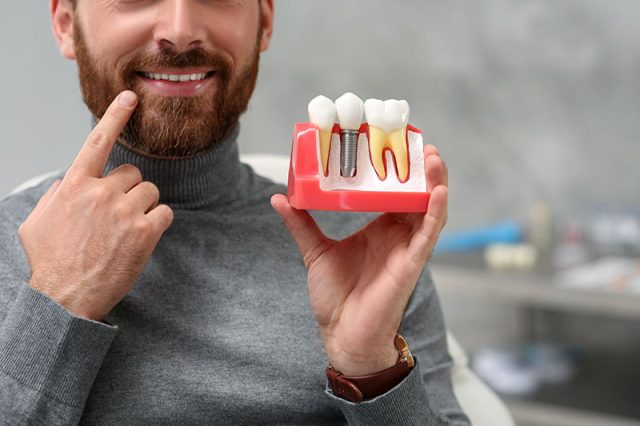
178 million Americans are living with a gap they’ve been told to ignore, or simply haven’t had the right information to address. Dental implants are the most complete solution available today — the only option that replaces both the tooth and the root, stops bone loss, and can last a lifetime with proper care.
At Algoma Family Dentistry, the Algoma dentists Dr. Daniel Fama and Dr. Patti Sigl are ready to give you a direct, honest evaluation — no pressure, no one-size-fits-all treatment plans, and no referrals out of town.
We welcome patients from Algoma, Bruemmerville, Forestville, Alaska, WI, and the surrounding area. Call our Algoma dental office at (920) 487-2733 or schedule your consultation online — and take the first step toward a smile that’s built to last. Our dental office is located at 1421 Lake St., Algoma, WI 54201.